

What Is a Left-Cross Bike Accident?
A left‑cross accident is a specific type of bicycle‑motor‑vehicle collision that occurs when a motorist traveling in the opposite direction turns left across an intersection, driveway, or an oncoming cyclist who is riding straight through the intersection. Because bikes are slender and often masked by larger vehicles, tree branches, or glare, drivers misjudge speed or fail to see the rider at all. The cyclist, who usually has the right of way, slams into the car’s passenger door or fender, or is sideswiped and thrown into traffic. Left-cross crashes are among the most common and deadliest types of urban cycling accidents, accounting for significant percentages of rider fatalities and catastrophic injuries in cities from Portland to Miami.
Legally, these collisions bring together traffic‑signal timing, sight‑line engineering, driver negligence, municipal roadway design, and sometimes bicycle‑equipment failure. Victims may pursue claims against inattentive drivers, ride-hail companies whose drivers make sudden U-turns to pick up passengers, cities that failed to maintain line‑of‑sight at intersections, or even vehicle manufacturers whose A‑pillars are so thick they create “blind zones.” Time‑sensitive evidence—dash‑cam video, traffic‑signal phase logs, and eyewitness accounts—can vanish within days.
That’s why The Injury Helpline maintains a 24/7 free hotline, instantly connecting left‑cross victims nationwide with attorneys, crash‑reconstruction engineers, and cycling‑safety experts prepared to lock down proof and maximize compensation.
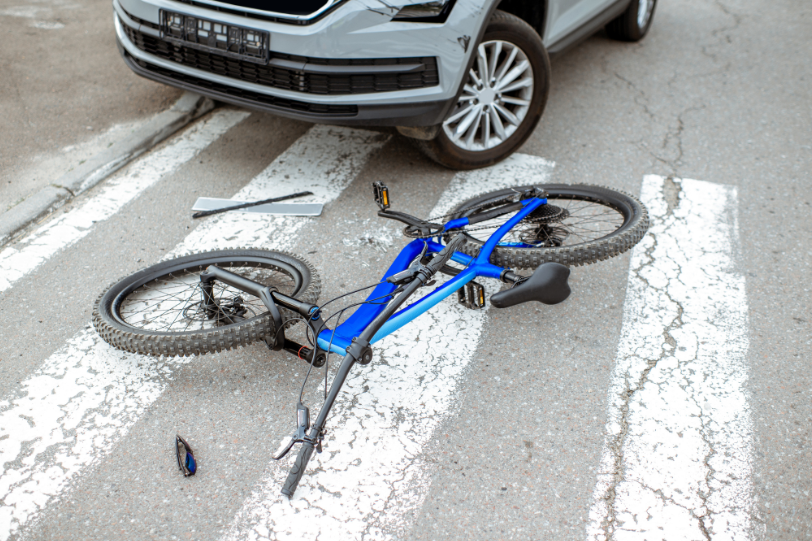
Why Left-Cross Accidents Are So Dangerous for Cyclists
Left-cross crashes are especially deadly because they often combine high speeds, driver distraction, and low cyclist visibility.
Unlike rear-end collisions or side-swipes, these crashes happen in an instant, leaving riders no room to swerve, stop, or escape. The risks are intensified by urban complexity and common driving habits. Consider the following danger factors that make left-cross accidents particularly lethal:
- Driver Attention Bias – Motorists scan for cars, not bikes; they underestimate a bicycle’s speed or assume its lane position is further away.
- Short Reaction Time – At 15‑20 mph, a rider traveling downhill closes the gap faster than drivers expect; by the time the car begins turning, escape options evaporate.
- Lateral Impact Forces – Cyclists collide broadside into metal doors, windshields, or A‑pillars, exposing torso and head to blunt trauma.
- Door Frame and Window Edge Hazards – Sharp edges and broken glass compound injury severity.
- Secondary Collisions – Riders thrown over handlebars may land in adjacent lanes, where trailing vehicles run them over.
- Night‑time Visibility Issues – Although many riders use lights, single‑point LEDs can be hard to judge for distance; drivers miscalculate approach time.
- Glare and Weather – Setting sun, rain‑smeared windshields, and fog obscure a bike’s silhouette.
- Intersection Complexity – Multiple turn lanes, flashing arrows, and permissive left signals require rapid driver decision‑making.
- High‑Speed Differential – Electric bikes (“e‑bikes”) reach 28+ mph, shrinking drivers’ perception‑reaction window further.
Common Injuries from Left-Cross Bike Accidents
The injuries resulting from these types of crashes are rarely minor. When a cyclist strikes the side of a vehicle or gets hit mid-intersection, the body absorbs a brutal amount of force.
These are some of the most devastating outcomes we frequently see:
- Driver Distraction
Looking at phones, infotainment screens, or GPS prompts a half‑second glance—long enough to miss a fast‑approaching cyclist. - Obstructed Sight Lines
Parked SUVs, delivery vans, overgrown trees, or utility poles block the driver’s view. - Misjudging Bike Speed and Size
Optical “looming” effect makes small objects (bikes) seem slower; drivers think they have time to turn. - Permissive Left‑Turn Signals
Green balls or flashing yellow arrows allow drivers to turn on green if clear, placing the burden on them to yield. - Failure to Use Turn Signals
Riders cannot anticipate the vehicle’s move; sudden turns leave no avoidance path. - Alcohol or Drug Impairment
Slows reaction and narrows peripheral vision. - Poor Intersection Design
No leading pedestrian interval, inadequate setback stop lines, or lack of bike‑specific signals. - Speeding Cyclists
Downhill or e‑bike riders approach at car‑like speeds, shocking unprepared drivers (shared fault may apply). - Faulty or Absent Bike Lights/Reflectors
At dusk or night, riders without legal lighting become invisible, complicating liability. - Thick Vehicle A‑Pillars
Modern crash‑safety design makes windshield pillars wider, expanding blind spots precisely where cyclists appear.
Devastating Injuries Typical of Left‑Cross Collisions
Because of the speed, angle, and nature of these crashes, the injuries cyclists sustain can be particularly severe—even with safety gear.
- Traumatic Brain Injury (TBI) – Even with helmets, side‑impact concussions, subdural hematomas, or diffuse axonal injuries can occur.
- Spinal Cord Damage – High‑energy torso rotation fractures vertebrae, risking paralysis.
- Facial Fractures and Dental Trauma – Windshield impacts shatter jaws, noses, and teeth.
- Chest and Abdominal Injuries – Rib fractures, lung contusions, spleen or liver lacerations from handlebar thrust and door strike.
- Lower‑Extremity Fractures – Tibia, femur, or pelvic breaks as legs slam against a bumper or the ground.
- Road Rash and Degloving – Asphalt abrasions expose muscle and bone, requiring skin grafts.
- Internal Bleeding – Hidden organ damage leads to life‑threatening hemorrhage.
- Amputations – Severe limb crush between the car and the frame.
- Psychological Trauma – PTSD, anxiety returning to cycling, and depression during long recoveries.
Rehab may require long-term recovery through surgeries, therapy, emotional support, and vocational rehabilitation. to resume work or school.
Who Can Be Held Liable in a Left-Cross Accident?
Liability doesn’t always stop with the driver behind the wheel. Depending on what caused or contributed to the crash, multiple parties may bear legal responsibility. Below are the entities that can be held accountable in left-cross scenarios:
- Turning Driver – The most straightforward defendant for failing to yield.
- Ride‑Hail or Delivery Companies – Drivers rushing to pickups or drop‑offs; vicarious liability or negligent hiring may apply.
- Municipalities and Road Agencies – Poor signal timing, lack of protected bike lanes, obscured signs, or untrimmed vegetation.
- Vehicle Manufacturers – Autopilot or advanced driver‑assistance systems (ADAS) that malfunction or fail to detect cyclists.
- Bicycle or Equipment Manufacturers – Brake failures, light malfunctions, or e‑bike throttle defects (secondary but sometimes relevant).
- Engineering or Maintenance Contractors – Construction zones that remove bike lanes or misplace traffic barrels.
- Alcohol Servers – Overserving drivers who subsequently pull dangerous turns (dram‑shop laws vary).
- Employers – Company‑car drivers on the clock; under the legal principle of employer liability, known as respondeat superior.
Your Legal Options After a Left-Cross Collision
When it comes to legal recovery, the path depends on the details of the crash and the types of negligence involved.
From statutory violations to product defects, here are the most common legal approaches victims may pursue:
- Negligence Per Se – Drivers violating right‑of‑way statutes or failing to signal are presumptively negligent in many states.
- Comparative Fault – Defense may argue the cyclist lacked lights or ran a red; percentages of fault alter damages, but rarely bar recovery entirely.
- Municipal‑Liability Claims – Dangerous intersection design or signal timing, but strict filing deadlines—sometimes just 30 to 180 days—may apply.
- Product‑Liability Actions – Against automakers for ADAS failure or bikes for component defects.
- Wrongful‑Death Suits – Funeral costs, loss of companionship, and future earnings for fatal crashes.
- Underinsured/Uninsured Motorist Coverage – Cyclists covered by their own auto policies can tap UM/UIM if the driver carries minimal limits.
- PIP or Med‑Pay Benefits – Some states extend no‑fault benefits to cyclists struck by vehicles.
- Insurance Bad Faith – When carriers unreasonably delay or undervalue clear liability claims.
Statutes of limitations—often two or three years, depending on the state—begin at the crash date. Always check the specific deadline in your state, as these rules can change.
Key Evidence Needed in a Left-Cross Bike Crash Case
Solid legal claims start with solid evidence. In a left-cross crash, collecting proof quickly is crucial before the video is overwritten or the scene is cleared.
Here’s the kind of evidence attorneys use to build a winning case:
- Police Report and Diagram – Notes right‑of‑way violations, witness names, and driver statements.
- Traffic‑Signal Phase Logs – Show exact light status; lawyers subpoena city timing data.
- Dash‑Cam and Surveillance Video – Gas stations, buses, or home security cameras capture impacts.
- Vehicle Event Data Recorder (EDR) Downloads – Pre‑impact speed, brake use, turn‑signal activation.
- Cyclist GPS and App Data – Strava or Garmin files confirm speed and route compliance.
- Skid Marks and Gouge Analysis – Reconstructionists pinpoint impact angle and speeds.
- Helmet and Bike Damage Documentation – Demonstrates force vectors.
- Medical Records – Correlate injury mechanics to crash physics; rapid ER imaging is crucial.
- Cell‑Phone Records – Establish driver distraction.
- Vegetation and Obstruction Photos – Show sight‑line problems that morning.
- Lighting Verification – Preserve bike lights and batteries to prove working condition.
The Injury Helpline’s attorney network dispatches investigators within hours to download video, laser‑scan intersections, and safeguard shattered bike parts before cleanup crews remove crucial evidence
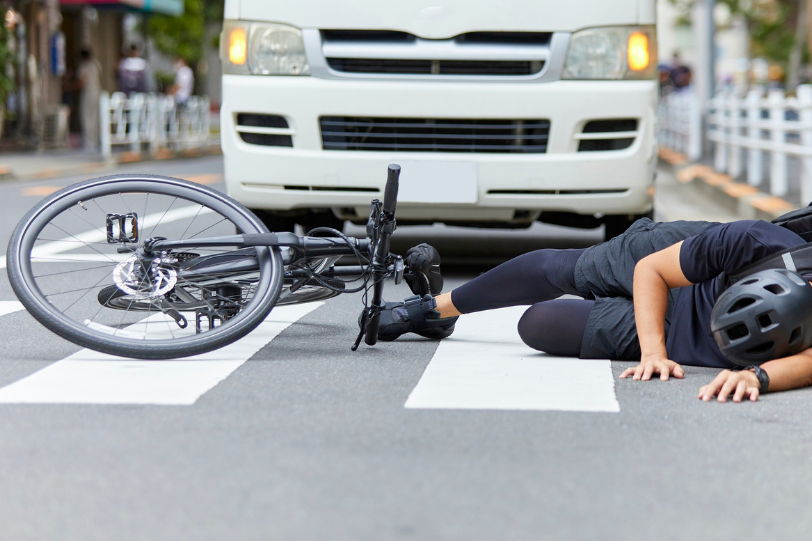
Common Defense Tactics and How to Respond
Insurance companies and defense lawyers often rely on predictable strategies to reduce liability. From blaming the cyclist to pointing at road design, these defenses can be countered—if you’re prepared. Below are common tactics and how experienced legal teams push back:
- Cyclist Was Speeding or Blew a Red Light – GPS data, eyewitnesses, and signal logs often disprove.
- No Lights or Dark Clothing – Produce working light units, receipts, and brightness tests; emphasize the driver’s duty to confirm a clear path before turning.
- Sudden “Dart‑Out” – Accident reconstruction often shows that the cyclist’s path doesn’t match this claim.
- Vegetation or Parked Cars Blocked View – That’s precisely why drivers must edge forward and ensure the path is clear; municipalities may share blame.
- Comparative Fault Bars Recovery – In pure comparative states, even 99% driver fault yields compensation for the remaining share.
- Cyclist Not in Bike Lane – Many states allow riders full‑lane use to avoid door zones; legal education refutes.
- Insurance Minimizing Injury Claims – Insurance adjusters often downplay conditions like road rash; medical experts outline infection risks, nerve damage, and emotional toll.
What Compensation Can You Recover After a Left-Cross Crash?
After a serious crash, victims often face financial burdens that go far beyond medical bills.
The law allows for recovery of both economic and non-economic losses. Depending on your case, compensation may cover:
- Emergency and Ongoing Medical Costs – Ambulance, surgeries, hospital stays, therapy, prescriptions, assistive devices.
- Future Care and Life‑Care Plans – Home modifications, wheelchairs, vocational rehab, counseling.
- Lost Wages and Reduced Earning Capacity – Past income missed and actuarial projections for career impact.
- Pain, Suffering, and Emotional Distress – Physical agony, scarring, PTSD, loss of independence.
- Property Damage – High‑end bikes, gear, GPS, clothing.
- Punitive Damages – For DUI drivers, hit-and-run, or corporations ignoring known ADAS flaws.
- Wrongful‑Death Compensation – Funeral expenses, loss of financial support, guidance, and companionship for bereaved families.
How Are Settlement Amounts Determined in Bicycle Accident Cases?
Settlement values in bicycle crash cases aren’t pulled out of a hat—they’re the result of careful analysis, negotiation, and sometimes a little arm wrestling with insurance carriers. Several key factors shape what a case is worth:
- Injury Severity – Catastrophic injuries (think: spinal cord damage, brain trauma, permanent disability) result in higher settlements due to lifelong care needs and quality-of-life impacts.
- Medical Documentation and Evidence – Clear diagnostic imaging, ER records, and documented treatments make it hard for insurers to argue.
- Strength of Liability Proof – Video footage, GPS data, credible witnesses, and expert crash reconstructions all back up your version of events.
- Out-of-Pocket Losses – A ledger of medical bills, lost wages, and bike replacement costs sets a tangible minimum value.
- Future Impact – Lost earning potential, need for ongoing therapy, or a career cut short gets factored in.
- Non-Economic Damages – Pain, suffering, and emotional distress carry weight—especially where trauma or lasting impairment is involved.
- Insurance Policy Limits – The at‑fault driver’s coverage often caps how much is realistically recoverable, though underinsured motorist coverage or umbrella policies may come into play.
An experienced attorney brings it all together—marshaling evidence, quantifying hardship, and ensuring insurers don’t take shortcuts—so you get every dollar you deserve.
FAQs About Left-Cross Bike Accidents
Every crash is unique, and many riders have questions about how fault is determined or what evidence is most important. These are some of the most frequently asked questions after a left-cross collision, and what victims should know:
- Does wearing a helmet affect my claim? Helmet use can reduce head injuries, but typically does not diminish liability for drivers who violate the right of way. Damage analyses may even strengthen the proof of causation.
- I had flashing lights and bright clothing—why didn’t the driver see me? Drivers often experience “inattentional blindness,” looking yet failing to register bikes. Your visibility gear supports your claim and counters comparative‑fault arguments.
- What if the intersection had a green arrow for left turns? If the arrow was protected, the driver may have the right of way. Signal logs clarify whether the arrow was solid green or a permissive flashing yellow, key to liability.
- Are bike lanes required for me to sue? No. Cyclists have roadway rights regardless of bike‑lane presence. The lack of safe infrastructure may implicate municipal liability.
- How soon should I call The Injury Helpline? Immediately. Video loops over, cars are repaired, and skid marks fade. The Injury Helpline answers 24/7, mobilizing evidence teams before crucial proof is lost.
Practical Tips to Avoid Left‑Cross Collisions
While not every crash is preventable, cyclists can reduce risk by riding defensively and watching for subtle signs of danger at intersections.
These practical strategies can help you stay visible, stay alert, and avoid common driver errors:
- Use Daytime Running Lights – Studies show flashing front lights cut crash risk.
- Take the Lane When Necessary – Move leftward to increase visibility and avoid door zones.
- Watch Driver Wheel and Eye Movement – Glance at tire rotation or head direction for early turn cues.
- Control Speed in Intersections – Cover brakes, anticipate sudden left hooks, especially downhill.
- Avoid Blind‑Spot Zones – Don’t ride against the curb at signalized intersections; maintain lateral distance.
- Install a Loud Bell or Horn – Audible alerts can jolt distracted drivers.
- Choose Routes with Protected Bike Lanes – Physical separation drastically lowers risk.
- Advocate Locally – Support leading pedestrian/cyclist intervals, bike‑specific signals, and curb‑protected lanes.
Immediate Steps After a Left‑Cross Accident
The moments after a crash are critical—not just for your health, but for your future claim. What you do at the scene can determine how much compensation you recover. Here’s a checklist of what to do immediately after a left-cross crash:
- Call 911 – Request police and EMS; mention head or neck injuries if suspected.
- Seek Medical Care – Adrenaline masks pain; insist on ER imaging to catch hidden fractures or bleeds.
- Stay at the Scene – Unless unsafe, gather driver’s license, insurance, and plate info.
- Photograph Everything – Vehicle damage, bike position, skid marks, traffic signals, vegetation.
- Collect Witness Contacts – Pedestrians, drivers, or store clerks; their statements counter driver excuses.
- Preserve Gear – Do not discard cracked helmets, lights, or torn clothing; they prove impact forces.
- File a Detailed Police Report – Ensure officer notes your version; request crash‑report number.
- Call The Injury Helpline – Rapid legal guidance prevents evidence loss and insurer manipulation.
How The Injury Helpline Helps Left‑Cross Victims
- Round‑the‑Clock Accessibility – Accidents happen day to dusk; our line never closes.
- Free, Comprehensive Case Review – Understand driver liability, municipal claims, and insurance stacks without paying a cent.
- Nation‑Wide Attorney Network – Lawyers who ride bikes, know traffic physics, and battle insurers daily.
- Engineering and Medical Experts – Full roster of reconstructionists, human‑factors specialists, orthopedic surgeons, and life‑care planners.
- Contingency‑Fee Model – Pay nothing up front; we only get paid when you do.
- Total Support – Property‑damage recovery, medical‑lien reduction, insurance‑paperwork navigation, and emotional support services.
Left‑cross accidents underscore the peril cyclists face when driver attention, intersection design, and vehicle ergonomics collide against the slim profile of a bicycle. The results—shattered bones, crushed helmets, and grieving families—are avoidable. They stem from preventable lapses: unchecked texts, permissive signal policies, overgrown hedges, and automakers prioritizing style over sight lines.
If a turning vehicle has upended your life, act swiftly. Secure medical help, preserve every fragment of evidence, and enlist experts who can turn skid marks and digital logs into compelling proof. The Injury Helpline, open 24/7 for a free consultation, connects injured cyclists nationwide with attorneys equipped to pierce driver excuses, expose municipal negligence, and force insurers to honor the true value of your pain, recovery, and future rides. Together, we’ll seek full compensation and push for safer streets where every left turn respects the right of way, so cycling remains not just healthy and green, but genuinely safe.