

When Poolside Turns Perilous: Understanding Slippery Pool Falls and Legal Accountability
Swimming pools are meant to be spaces of recreation and relaxation—a cool break from summer heat or a centerpiece of family vacations. Yet all too often, these places of fun conceal serious hazards just beneath the water’s edge. One of the most common and underestimated dangers around pools is the slippery surface of the surrounding deck. What may seem like an everyday part of pool use can, in fact, be the cause of devastating injuries. From fractured ankles and broken wrists to concussions, spinal trauma, and even drownings, a single misstep on a slick poolside area can change lives in an instant.
Slippery pool falls occur when someone loses their footing on a wet, algae-coated, or otherwise unsafe walking surface near a pool. These accidents don’t discriminate by age or location—they happen at public water parks, hotel resorts, cruise ship decks, apartment complexes, and private backyards alike. The dangers are often worsened by improper materials, neglected maintenance, poor lighting, and carelessness by those responsible for guest safety.
Under the lens of civil law, these incidents typically fall within the umbrella of premises liability. However, liability may not rest solely with the property owner. Depending on the circumstances, a range of individuals and entities—from pool management companies to architects—could be held responsible. And in the aftermath of a serious fall, victims are often left wondering: who’s to blame, and how can I afford the medical bills?
This article walks through the causes of slippery pool falls, outlines legal responsibilities, breaks down common injuries, and offers practical advice for both prevention and action if you or a loved one is harmed.
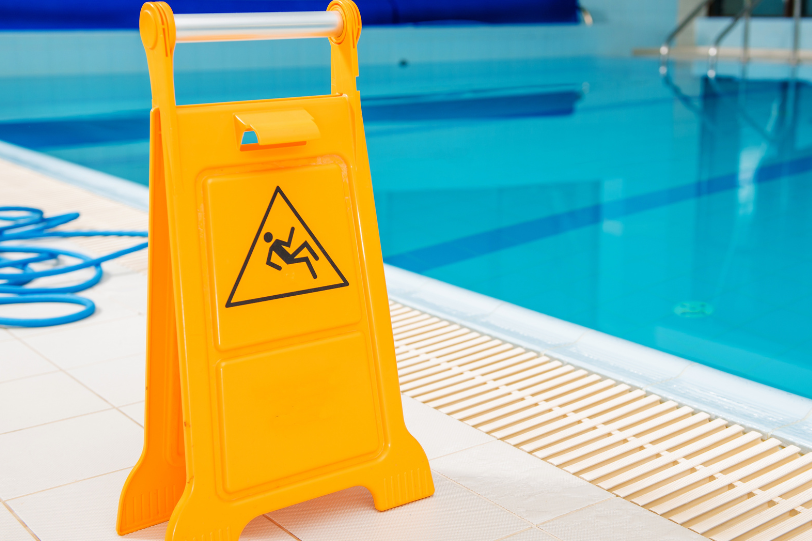
The Real Reasons Pool Decks Become Dangerous
Though it’s no surprise that pool decks get wet, it’s the combination of water and other environmental or man-made conditions that turn them into slip hazards. Continuous splashing from swimmers, waves from diving, and runoff from pool equipment saturate deck surfaces throughout the day. While a damp floor might seem like an expected risk, legal codes in most jurisdictions make it clear that mere “wetness” doesn’t excuse unsafe conditions.
One of the biggest culprits is the use of overly smooth or polished deck materials, like glazed ceramic tiles or sealed concrete without anti-slip additives. These surfaces, attractive as they may be, become treacherously slick with even a thin film of water. Add body oils, sunscreen, or spilled drinks into the mix, and the frictionless layer is nearly invisible yet extremely hazardous.
Poor maintenance practices further compound the danger. Algae, mold, and mildew thrive in moist areas with little sunlight, often forming slimy films along steps, entry ladders, or shaded edges of the deck. Without proper cleaning protocols and chemical treatments, these growths quickly reduce traction.
Improper slope and faulty drainage designs can also create standing puddles that last for hours. And in the evening hours, inadequate lighting may keep guests from noticing those puddles or loose tiles, increasing the chances of a serious fall.
In some facilities, safety features like textured mats near high-traffic zones—such as diving boards or ladder exits—are either missing or worn smooth from overuse. What’s worse, some properties ban water shoes for aesthetic reasons, unknowingly eliminating a simple tool that could improve safety.
Real-World Examples: How Slippery Pool Falls Unfold
Though every case is unique, many fall incidents follow patterns that highlight how preventable they truly are. Imagine a hotel guest rushing to reserve a poolside lounge chair. A nearby waiter spills a sugary cocktail and fails to alert anyone to the cleanup. Within moments, the guest slips, falls hard on the deck, and suffers a fractured hip. Or consider a cruise ship where the pool deck is constantly slick from sea spray and spilled sunscreen—when a child dashes from a slide, they lose traction and fall, resulting in a broken wrist and concussion.
Other times, it’s faulty materials that play a role. A private homeowner, in an attempt to beautify their pool, installs glossy epoxy over the concrete deck. They don’t realize that without anti-skid granules, the surface becomes nearly as slick as glass when wet. During a backyard party, a guest unknowingly steps onto the treated surface, slips into the pool, and is knocked unconscious.
At public water parks or swim meets, the causes can be just as varied—lane timers’ chairs dripping onto polished concrete, drainage grates clogged with leaves, or cleaning chemicals improperly rinsed from the floor. In each of these cases, someone’s failure to act or pay attention creates the perfect conditions for a fall.
The Medical Consequences: More Than Just a Bruise
People often underestimate the physical impact of a poolside fall. But unlike a carpeted hallway or grassy yard, the materials surrounding pools are almost always unforgiving. Concrete, tile, and metal grates offer no cushion. As a result, falls often lead to significant injuries, such as:
- Traumatic Brain Injuries (TBIs) from striking the head on hard deck surfaces
- Spinal injuries, including fractures and nerve damage from sudden impacts
- Bone fractures and dislocations of the wrist, elbow, hip, ankle, or knee
- Facial trauma, including broken noses, dental fractures, or eye socket injuries
- Drowning or near-drowning occurs when victims are rendered unconscious and slip into the water
- Lacerations and soft-tissue tears, especially from sharp edges or cracked tiles
Treatment may involve emergency room visits, diagnostic imaging, surgeries, physical therapy, and in many cases, long-term rehabilitation. Dental reconstruction and psychological therapy may also be necessary, particularly if the victim develops PTSD or a fear of swimming.
Who’s Responsible? Understanding Legal Accountability
In the eyes of the law, property owners owe a duty of care to visitors, particularly those considered “invitees”—such as hotel guests, apartment residents, or public pool patrons. This duty includes maintaining reasonably safe conditions and addressing known or foreseeable hazards.
But liability can extend far beyond the property owner. The list of potentially responsible parties may include:
- Pool management companies that are contracted to monitor and maintain the area
- Janitorial or maintenance crews who failed to clean properly or document issues
- Chemical suppliers, particularly if their products left residue that created a slippery film
- Architects or contractors who designed or built the deck with an improper slope or drainage
- Material manufacturers, if their non-slip products failed to perform as advertised
- Event organizers at swim meets or parties who failed to manage water accumulation and crowd control
- Lifeguard companies, when guards failed to enforce running restrictions or delayed responses to spills
In some cases, government entities may also be responsible, particularly if the incident occurred at a city-owned pool or park. These cases carry specific procedural rules and deadlines, often requiring early written notice to preserve the right to sue.
How the Law Frames Slippery-Pool Accidents
Multiple legal theories can come into play in these cases. The most common is premises liability, where an injured party must show that the owner failed to maintain safe conditions or warn of known dangers. In jurisdictions that adopt negligence per se, a violation of pool safety codes—such as using non-compliant materials or failing to slope the deck properly—can serve as automatic evidence of breach.
Other doctrines include:
- Respondeat superior, which holds employers liable for the negligent actions of staff
- Product liability, when defective mats, tiles, or coatings are to blame
- Negligent design, where poor architectural decisions lead to unsafe water accumulation
- Failure to warn when there are no signs indicating slippery conditions or recent cleaning
- Comparative fault, in which defendants argue the victim shares blame by running or ignoring the rules.
Some states recognize dram shop liability for falls involving intoxicated guests overserved by poolside bars. However, this area of law varies significantly by jurisdiction.
What Evidence Helps Strengthen a Case?
Building a strong claim after a poolside fall requires more than just describing what happened. Evidence is essential. Effective documentation might include:
- Incident reports are filed immediately with pool management
- Photographs and videos of the deck’s condition at the time—puddles, algae, poor lighting, missing mats
- Surveillance footage, which is often overwritten quickly without legal intervention
- Chemical and maintenance logs, showing whether cleanings or treatments were skipped
- Witness statements, especially from guests or staff who saw the hazard or the fall
- Product specs for deck materials, confirming that they failed to meet safety standards
- Health department citations for previous violations
- Medical records, linking the injuries directly to the fall
In more complex cases, slip-resistance testing by safety engineers may be used to measure the deck’s coefficient of friction and determine if it meets local and federal standards.
Typical Compensation for Victims
When liability is proven, injury victims may be entitled to compensation for a variety of losses, including:
- Current and future medical expenses
- Lost wages or reduced earning potential
- Pain and suffering
- Psychological distress
- Scarring or permanent disfigurement
- Loss of quality of life
- Wrongful death damages, including funeral costs and lost companionship
- Punitive damages, in rare cases involving gross negligence or fraud
Payouts depend heavily on the nature of the injuries, the strength of the evidence, and whether the responsible party has insurance or assets.
Immediate Steps After a Slippery Pool Fall
If you or someone you care about has suffered a fall around a pool, take these actions promptly:
- Seek medical attention, even if injuries seem minor at first. Internal or head trauma can manifest hours later.
- Report the incident to staff and get a written copy of the report if possible.
- Photograph the area, including wet spots, visible algae, lighting conditions, and any missing safety features.
- Identify and speak to witnesses, noting their names and contact information.
- Preserve footwear and clothing, which may have evidence like residue or wear patterns.
- Request surveillance footage, and if possible, involve legal counsel to formally preserve digital records.
How The Injury Helpline Champions Pool‑Fall Victims
The Injury Helpline offers more than legal advice—it delivers critical support during a stressful, often painful time. Available 24/7, it connects victims with skilled attorneys experienced in pool liability cases. These professionals understand not just the laws, but the science behind slippery surfaces, the tactics insurance companies use to avoid payment, and the medical documentation required to present a strong claim.
- 24/7 Live Response – Immediate human support—no bots, no hold music.
- Free, In‑Depth Case Review – Liability analysis, medical cost projections, and legal deadlines at zero cost.
- Nation‑Wide Attorney Network – Lawyers seasoned in premises liability, insurance negotiation, and trial advocacy.
- Elite Expert Resources – Slip‑resistance engineers, aquatic‑facility consultants, orthopedic surgeons, economists, life‑care planners.
- Contingency‑Fee Representation – No legal fees unless we secure compensation.
- Holistic Recovery Support – Medical‑lien reduction, therapy referrals, property‑damage reimbursement, structured‑settlement planning.
Slippery‑pool falls transform vacations, swim meets, and backyard barbecues into scenes of broken bones, concussions, and shattered confidence. These injuries aren’t unavoidable—they stem from algae‑coated decks, ignored puddles, and cost‑cutting material choices that put profit over safety. When owners and operators neglect their duty to keep pool decks secure, they must answer for the pain inflicted.
If a slick pool surface has upended your life, act swiftly. Document the hazard, obtain medical care, and enlist attorneys who know pool codes, slip‑resistance science, and the tactics insurers deploy to minimize claims.
The Injury Helpline, open around the clock for a free consultation, connects victims nation‑wide to dedicated advocates who will fight for every dollar needed for surgeries, therapy, and a restored sense of security. Together, we can turn slippery negligence into solid accountability—making pools places of joy, not jeopardy.