

What Happens in a Crosswalk Bicycle Accident?
A crosswalk bicycle accident happens when a rider, either pedaling or walking their bike, enters a marked or unmarked crosswalk and is struck by a motor vehicle, scooter, or a turning vehicle like a truck or SUV.. Although crosswalks are designed to protect vulnerable road users, many drivers look only for pedestrians moving at walking speed.
A cyclist’s faster approach, lower profile, and unclear legal protections for cyclists in crosswalks leave drivers unprepared. The result can be a front‑bumper hit that throws the rider onto the hood, a right‑hook collision from a vehicle turning across the crosswalk, or a rear‑end impact when a driver runs a red light. These types of crashes often result in serious head, spine, and limb injuries, especially to children who ride on neighborhood sidewalks and dart into intersections.
These incidents invoke a mix of state traffic codes, city ordinances, school‑zone regulations, and driver‑duty principles. Victims may seek damages from negligent motorists, municipalities that failed to repaint fading zebra stripes, or commercial fleet owners whose rush‑hour trucks rolled through a flashing beacon. Capturing surveillance footage, school‑crossing‑guard logs, and vehicle event‑data records must start within days. That’s why The Injury Helpline offers a 24/7 free consultation and pairs injured riders nationwide with attorneys and crash‑reconstruction experts who understand crosswalk law nuances.
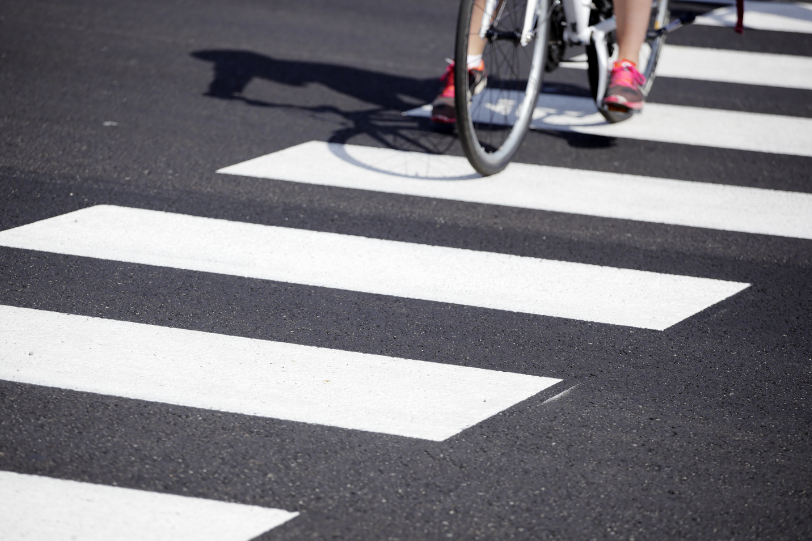
Why Crosswalk Accidents Are So Dangerous for Cyclists
Crosswalks are meant to be safe zones, but for cyclists, they often become zones of confusion and high risk. Unlike pedestrians, cyclists move faster and are harder to see, especially by drivers expecting foot traffic.
These are some of the reasons crosswalks can quickly become hazardous for bike riders:
- Speed Differential Misjudgment – Drivers expect walkers at 3–4 mph; a cyclist coasting at 10–15 mph reaches the driver’s path much sooner.
- Sight‑Line Obstacles – Parked cars, shrubbery, and A‑pillars hide approaching bikes, particularly small children.
- Confusion About Rights of Way – Some states treat cyclists in crosswalks as pedestrians; others don’t. Drivers—and sometimes police—misinterpret statutes, delaying medical and legal relief.
- Multiple Threats – A rider glancing left for over‑the‑shoulder traffic may not see a right‑turning SUV whose driver is studying opposing lanes, not the crosswalk.
- Inadequate Infrastructure – Faded markings, missing advance‑yield stop bars, and malfunctioning pedestrian signals reduce driver compliance.
- Distracted School‑Zone Traffic – Parents juggling drop‑offs, coffee, and phones create dense, inattentive driver clusters.
- Nighttime Visibility Gaps – Overhead lighting seldom illuminates the entire crosswalk breadth; a single bike headlight may go unnoticed in low-light conditions
- False Security for Kids – Children trust painted lines to stop cars and may ride straight off sidewalks without slowing.
Common Scenarios That Lead to Crosswalk Bike Accidents
Understanding how these accidents happen is key to preventing them—and to proving fault when they do occur. Let’s break down the most common scenarios that lead to crosswalk collisions involving cyclists:
- Turning‑Vehicle Right Hook
The driver turns right on red, scanning left for cars, not right for riders entering the crosswalk. - Permissive Left Turn Across Multi‑Lane Intersection
Oncoming cars hide a cyclist entering on a pedestrian signal; the driver accelerates through a small gap and collides broadside. - Red‑Light Runner
Motorist accelerates through a stale yellow; cyclist enters on a walk signal and is struck. - Stop‑Sign Roll‑Through
Suburban drivers perform “California roll,” missing younger riders who are near sidewalk level. - Driveway or Mall Entrance
Vehicles turning into shopping centers cross a marked crosswalk cut through the sidewalk path. - School‑Crossing Guard Gaps
Guard signals children across; lagging bicyclist starts a few seconds late, driver assumes the crosswalk is clear, and proceeds. - Bus or Truck Blind Spot
Large vehicles stop ahead of the crosswalk; when the light turns green, they accelerate, sweeping right where a bike is mid‑crossing. - Flashing Beacon Ignored
The driver fails to yield to a Rectangular Rapid‑Flash Beacon (RRFB) activated by a cyclist.
Common Injuries in Crosswalk Bicycle Accidents
The human body is no match for a moving vehicle, and the injuries sustained in a crosswalk crash can be especially severe.
Here’s a look at the kinds of harm victims often suffer:
- Traumatic Brain and Facial Injuries – Lateral impacts crack helmets, smash jaws, or fracture orbital bones.
- Spinal and Pelvic Fractures – Sudden deceleration flips riders onto their backs or under vehicles.
- Lower‑Extremity Trauma – Bumpers crush tibias; wheels roll over feet, causing Lisfranc fractures.
- Internal Organ Damage – Handlebar thrusts and side‑panel hits tear spleens or livers.
- Upper‑Extremity Fractures – Instinctive bracing snaps wrists, elbows, or clavicles.
- Severe Abrasions (“Road Rash”) – Sliding across pavement at double pedestrian speed removes skin layers.
- Pediatric Growth Plate Injuries – Kids’ bones suffer unique fractures that jeopardize limb development.
- Psychological Harm – Phobias about biking, nightmares, and school avoidance.
Recovery often involves orthopedic surgery, dental reconstruction, months of rehab, adaptive devices for school or work, and counseling.
Who May Be Liable in a Crosswalk Bicycle Accident?
Liability can extend beyond the driver. Depending on the facts of the case, responsibility may rest with government entities, commercial operators, or even manufacturers. Potentially responsible parties include:
- Turning Driver – Primary responsibility to yield to crosswalk users.
- Ride‑Hail / Delivery Fleet Owners – Vicarious liability for contracted drivers.
- Municipalities and Transportation Agencies – Neglected paint, burned-out signals, or missing pedestrian‑only phases.
- School Districts – Inadequate crossing‑guard staffing or malfunctioning flashing signs.
- Vehicle Manufacturers – Failure of pedestrian‑detection automatic braking systems (ADAS).
- Property Owners – Shrubs or signage blocking driver sight lines near driveway crosswalks.
- Road‑Construction Contractors – Temporary detours that funnel bikes into unprotected crossings.
- Helmet or Bike‑Component Makers – Straps that break or brakes that fail, exacerbating injury.
Legal Options for Crosswalk Bicycle Accident Victims
If you’ve been injured in a crosswalk while riding a bike, the law provides several routes to compensation.
From traffic code violations to product liability, these are the key legal theories that can support your claim:
- Negligence per Se – Violation of statutes requiring drivers to yield to crosswalk users establishes breach automatically in many jurisdictions.
- Comparative Fault – Defendants may argue the cyclist entered the crosswalk illegally or at an unsafe speed; fault percentages influence payout but seldom bar recovery.
- Premises Liability – Private driveway crosswalks with obstructed views implicate business owners.
- Municipal Immunity Exceptions – Dangerous condition of public property claims; strict notice deadlines (30–180 days).
- Product Liability – Defective ADAS failing to detect a bicycle, or faulty bike brake cables.
- Underinsured/Uninsured Motorist Claims – The Cyclist’s own auto policy can supplement if the driver lacks coverage.
- Med‑Pay and PIP Benefits – Immediate medical funds regardless of fault in certain no‑fault states.
- Wrongful‑Death Actions – Funeral costs, loss of companionship, and future earnings for fatal crashes.
Prompt legal action preserves surveillance footage, which is often overwritten within 7 to 14 days, depending on the system, and secures traffic‑signal timing data before recalibration.
Evidence That Builds a Strong Case
Evidence wins cases—especially in situations where fault is disputed or police reports are unclear.
To support your claim and hold the responsible party accountable, your legal team may gather:
- Police and Crash‑Investigation Reports – Document driver statements and statute violations.
- Dash‑Cam, Bus‑Cam, and Intersection Video – Show right‑of‑way status and cyclist visibility.
- Traffic‑Signal Data Logs – Confirm walk‑signal activation and clearance intervals.
- Vehicle EDR Downloads – Speed, brake pedal, steering angle, and turn‑signal status.
- Witness and Crossing‑Guard Testimony – Establish driver inattentiveness or cell‑phone use.
- Cell‑Phone and Infotainment Records – Prove distraction at impact.
- Bike Computer / App Data – Garmin or Strava files display cyclist speed and compliance.
- Physical Scene Measurements – Crosswalk width, faded stripes percentage, shrub height, stop‑bar distance.
- Medical Records and Injury Photos – Time‑stamped evidence tying trauma to crash mechanics.
- Maintenance and Inspection Logs – Proof of city neglect or missed ADAS recall.
The Injury Helpline dispatches investigators quickly to secure video before municipal purge cycles and to laser‑scan crosswalk geometry for 3‑D reconstructions.
Common Insurance Defenses—and How to Push Back
Insurance companies don’t hand over checks without a fight. They often use standard tactics to avoid liability or reduce payouts.
Anticipate these common defenses—and the strategies attorneys use to dismantle them:
- Cyclist Rode Off Sidewalk Without Stopping – In many states, cyclists enjoy pedestrian rights once in a crosswalk; expert timing analysis shows the driver still had a duty to yield.
- No Bike Lights / Dark Clothing – Nighttime crashes are encountered by street‑light measurements, reflective gear, and reasonable driver look‑out obligations.
- Sudden Darting – Physics modeling often proves the rider visible for several seconds, with ample avoidance time.
- Comparative Negligence Exceeds 50% (Modified States) – Early evidence gathering keeps the cyclist’s fault allocation low or disproves outright.
- Government Immunity – Plaintiffs meet notice deadlines and demonstrate known hazardous conditions.
- ADAS System Meets Regulations – Federal compliance doesn’t excuse design defect; real‑world testing data shows system failure modes.
Recoverable Damages
What can you be compensated for after a crosswalk bicycle crash? Beyond emergency care, the damages can cover long-term losses, emotional trauma, and even punitive penalties for reckless behavior. Here’s what a successful claim may include:
- Emergency Room and Surgical Costs
- Rehabilitation, Prosthetics, and Adaptive School/Work Equipment
- Future Medical Needs and Life‑Care Plans
- Lost Wages and Diminished Earning Capacity
- Pain, Suffering, and Emotional Distress
- Property Replacement—Bike, Helmet, Electronics
- Punitive Damages for Reckless or Drunk Drivers
- Wrongful‑Death Compensation for Families
Frequently Asked Questions About Crosswalk Bike Accidents
- Do I violate the law by riding through a crosswalk instead of walking? In many states, you may ride, retaining pedestrian rights. Others require dismount. Local statutes matter; your attorney clarifies and frames liability accordingly.
- The police report says I was at fault. Am I out of luck? Not necessarily. Police often misunderstand bike laws. Independent reconstruction and witness statements can overturn erroneous blame.
- What if the driver fled? Your UM/UIM auto coverage and Victims‑of‑Crime funds can help. Lawyers work with police and subpoena nearby cameras to find the vehicle.
- The city knew school‑zone lights were broken for weeks—does that help? Yes. Prior complaints establish notice, defeating immunity and boosting municipal liability.
- How fast should I contact The Injury Helpline? Immediately. Video, data logs, and eyewitness memories fade fast. The Injury Helpline answers any hour to lock down proof and medical care.
Smart Riding Tips for Safer Crosswalk Use
Not every crash is preventable, but cyclists can take steps to reduce risk and ride smarter. Whether you’re commuting or just out for a ride, these tips can help you navigate crosswalks more safely:
- Slow and Scan – Approach crosswalks under 10 mph; look left‑right‑left even on the walk signal.
- Use High‑Visibility Gear – Daytime running lights and reflective ankle straps catch the driver’s attention.
- Make Eye Contact – Confirm the driver sees you before proceeding; wave if needed.
- Take the Lane in Heavy Traffic – Sometimes safer to cross with cars on green, avoiding sidepath ambiguity.
- Activate Pedestrian Buttons – Get a solid walk phase or leading interval when available.
- Teach Kids “Stop, Look, Listen, Walk Bike” – Reduces unpredictable dart‑outs.
- Advocate for Better Design – Push cities to install protected bike crossings, curb extensions, and zebra‑stripe refresh schedules.
Immediate Action Checklist After a Crosswalk Crash
In the chaotic moments after a crash, what you do next can impact your health, your legal case, and your ability to recover financially. Follow this step-by-step checklist to protect yourself:
- Call 911 – Report injuries and hit‑and‑run if applicable.
- Accept EMS Transport – Adrenaline masks serious trauma; documentation starts at ER.
- Collect Driver and Witness Info – Phone photos of license, insurance, faces, and plate.
- Document Scene – Snap the condition of the crosswalk markings, traffic lights, skid marks, and bike damage.
- Preserve Gear – Store smashed helmet, lights, and torn clothing for evidence.
- Note: Visibility Factors – Street‑lamp outages, overgrown bushes, or parked vehicles blocking sight.
- Request Police Report Number – Vital for insurance and legal filings.
- Call The Injury Helpline – Representation starts evidence preservation letters and insurer notices the same day.
How The Injury Helpline Empowers Victims
The Injury Helpline doesn’t just connect you to a lawyer—it delivers a full support system built around your recovery. From evidence preservation to advanced case reconstruction, here’s how we help crosswalk victims take control of their future:
- 24/7 Real‑Person Access – No chatbots, ever.
- Complimentary Deep‑Dive Case Review – Unpack driver negligence, municipal liability, and insurance layers at zero cost.
- Cycling‑Savvy Attorney Network – Lawyers who ride—and litigate—across all 50 states.
- Cutting‑Edge Reconstruction Resources – Drone photogrammetry, 3‑D animation, and biomechanical analysis.
- Contingency‑Only Fees – We earn nothing unless you win.
- Full‑Spectrum Recovery Support – Property damage payout, medical‑lien reductions, structured settlements and access to mental health resources.
Crosswalk bicycle accidents shatter the perceived safety of painted lines meant to protect our youngest riders, commuter cyclists, and seniors alike. When impatient drivers, faded markings, or broken signals intersect with a bike’s slim silhouette, the aftermath can be catastrophic. Yet these tragedies are preventable—and legally redressable. By acting fast to secure evidence, medical care, and experienced counsel, victims convert chaos into accountability and healing.
If a crosswalk ride has left you injured or grieving, don’t battle bureaucracy alone. The Injury Helpline, open around the clock for a free consultation, unites you with attorneys skilled at proving liability, challenging insurer stall tactics, and demanding every dollar needed for recovery. Together, we can turn pavement paint into genuine protection—and ensure that every ride to school, the store, or the office ends exactly where it should: safely on the other side.