

Industrial Machinery Accidents: Understanding Your Legal Rights After a Devastating Workplace Injury
In the industrial world, the line between productivity and catastrophe is razor-thin. Workers who spend their days operating or maintaining powerful machines—presses, robotic arms, conveyors, hydraulic balers, and CNC mills—know that one missed signal, skipped safety step, or unnoticed malfunction can have life-altering consequences. A routine shift can suddenly become a fight for survival.
An industrial machinery accident occurs when a worker is seriously injured—or killed—due to the operation, breakdown, or maintenance of heavy-powered equipment. These machines, essential for large-scale manufacturing and processing, also present extreme risks. A crushed hand from a hydraulic press, a limb pulled into an unguarded conveyor belt, or a fatal blow from a malfunctioning robotic arm isn’t just a tragic fluke—it’s often the result of failed safety protocols, faulty design, or corporate negligence.
While most employees are covered under their state’s workers’ compensation system, those benefits are limited. They rarely provide for pain and suffering or full wage replacement. However, if someone outside of your direct employer contributed to the accident—like a contractor, maintenance provider, or equipment manufacturer—you may be entitled to pursue additional compensation through a civil claim.
This guide breaks down how these accidents happen, who may be responsible, and what you can do to protect your health and legal rights after a machinery-related injury.
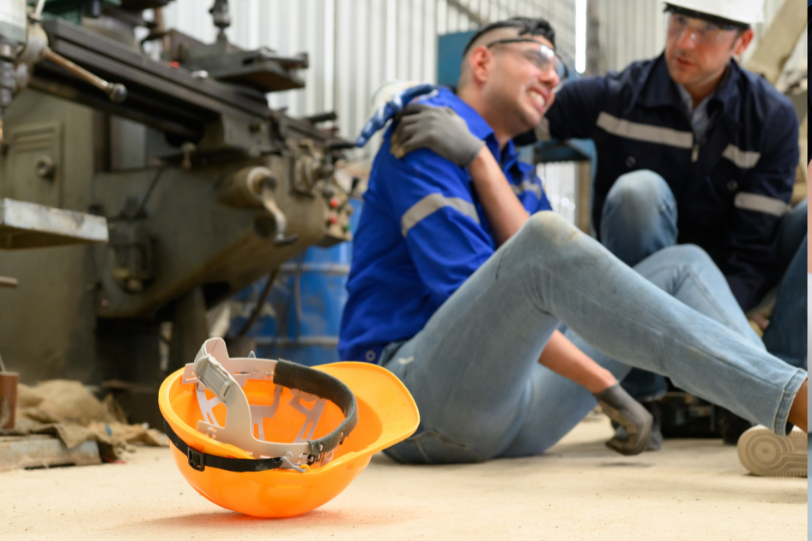
Why Industrial Machines Are So Dangerous
Industrial machinery operates on a scale far beyond ordinary tools. The sheer force and speed of equipment on the factory floor can turn minor errors into major disasters, often in less than a second.
Several factors contribute to the extreme risks:
- Tremendous Force and Speed – Machines like stamping presses or rotary cutters exert massive power, far faster than the human reflex. A finger in the wrong place at the wrong time can result in amputation instantly.
- Automation Complexity – Modern equipment is often software-controlled and sensor-dependent. A faulty sensor or software glitch can cause a robotic arm to move unexpectedly or reset into operation while someone is inside its zone.
- Production Pressure – Quotas, tight deadlines, and bonuses tied to speed push workers—and sometimes supervisors—to cut corners on safety.
- Multiple Employers on the Floor – Contractors, temps, and outside service techs often share space with little coordination. Training varies widely between crews.
- Aging Machinery – Older equipment may lack modern safeguards like light curtains, dual-hand controls, or emergency stops—but is still used due to high replacement costs.
- Energy Risks Beyond Electricity – Machines powered by compressed air, hydraulic fluid, or even stored mechanical energy can release force even when powered off, making lockout/tagout compliance critical.
- Distraction and Noise – Loud environments mask verbal warnings or mechanical clicks signaling danger. Forklifts, radios, or multiple alarms add to the confusion.
In short, industrial machines don’t just malfunction—they demand near-perfect vigilance, coordination, and system-wide safety enforcement. When any piece of that puzzle is missing, the results can be catastrophic.
Safeguarding Devices Used with Foot Pedal Controls
Foot pedal controls, while essential for efficient press operation, present unique hazards if not properly protected. To reduce the risk of accidental activation or injury, several types of safeguarding devices are commonly employed:
- Physical Barriers and Gates – Metal shields, gates, or barrier guards are installed to physically block any part of the body from entering the danger zone during operation. Some are designed to automatically move into place when the press is active.
- Interlocked Guards – These systems use switches or sensors to detect when a gate, door, or barrier is open. If triggered, the interlock prevents the press from cycling until the area is secure, acting as an electronic fail-safe against unexpected startups.
- Pullback and Restraint Devices – These attach to the operator’s wrists or hands and retract them from the point of operation whenever the press cycles, minimizing the chance of contact during potentially hazardous moments.
- Two-Hand Controls – By requiring both hands to be on the controls, these devices make it nearly impossible for the operator’s hands to be in the danger area when the machine is activated, rendering accidental foot pedal activation moot.
- Presence-Sensing Devices – Advanced solutions like light curtains, pressure-sensitive mats, or photoelectric sensors “see” when a body part enters the hazard zone. If something breaks the beam or presses the mat, the press won’t cycle.
The effectiveness of any safeguarding device hinges on regular inspection, functional testing, and diligent maintenance. Without these, even the best technology can fail, leading to consequences that are often severe and irreversible.
Dual Palm-Button Controls vs. Foot Pedals: Which Is Safer?
When it comes to mechanical power presses, the design of the operating controls can make all the difference between a safe shift and a catastrophic injury. Two of the most common controls you’ll encounter are dual palm-button stations and foot pedals—but they’re miles apart in terms of protecting operators from amputations and other serious injuries.
Dual palm-button controls are the clear favorite for safety, and it’s easy to see why. The only way to activate the press with this setup is by using both hands—one on each button—at the same time. This forces operators to keep their hands completely clear of the press’s danger zone before the machine can cycle. It’s a simple but brilliantly effective design: you can’t accidentally leave a hand in harm’s way because both are busy starting the machine. In essence, it builds a layer of physical impossibility between the operator and a potential disaster.
Foot pedal controls, on the other hand, don’t offer the same natural safeguard. With foot-activated presses, hands are free while starting the machine, leaving open the risk that a hand could stray into the hazard area at the precise wrong second. While other safety barriers—like interlocked guards, gates, or pullback devices—are often paired with foot pedals, their effectiveness depends on them being perfectly maintained and never bypassed (either accidentally or intentionally). In the real world, shortcuts or hurried troubleshooting can lead workers to defeat these protections, especially during repetitive or time-crunched tasks.
Bottom line: If you’re working around or operating a mechanical power press, dual palm-button controls add an invaluable layer of prevention against amputations. While foot pedals may offer convenience, they require additional safeguards and strict maintenance to even approach the level of safety that palm-button controls inherently offer. Where possible, updated safety protocols and retrofitting with dual palm buttons are strongly recommended to keep hands where they belong: safely out of the danger zone.
How These Accidents Commonly Happen
Although every incident is unique, certain patterns appear time and again in industrial machinery accident investigations:
- Safety Guards Bypassed or Removed – Guards meant to block access to dangerous parts are disabled to save time or troubleshoot problems.
- Lack of Lockout/Tagout Procedures – Equipment is not properly de-energized before maintenance. A co-worker unknowingly starts a cycle, crushing or amputating the technician.
- Sudden Startup – Machines automatically restart after a reset, power surge, or jam, catching workers mid-inspection.
- Defective Components – Foot pedals stick, sensors fail, or control panels lack redundancy. The system keeps moving even when it shouldn’t.
- Untrained Workers on Complex Equipment – Temps or new hires are thrown onto machines they haven’t been properly trained to operate.
- Skipped Maintenance – Hydraulic drift, worn gears, or control errors cause unexpected motion or loss of braking.
- PPE Failures – Gloves or loose clothing get caught in rotating shafts. Hearing protection can prevent someone from noticing an alarm.
- Ignored Safety Complaints – Supervisors overlook repeated reports of malfunctioning safeguards or reward high output despite known risks.
These accidents are rarely “freak occurrences.” They’re predictable—and preventable—failures.
Types of Injuries Associated with Machinery Malfunctions
The injuries sustained from these kinds of incidents are often severe, life-altering, and require intensive medical care. Some of the most common include:
- Amputations – Whether from press shears, rolling lines, or rotating equipment, fingers, hands, or limbs are often severed instantly.
- Crush Injuries – Internal bleeding, organ damage, and musculoskeletal collapse from entrapment or compression.
- Brain Trauma – Hard impacts from debris, being thrown, or falls triggered by machine motion lead to TBIs and cognitive disability.
- Deep Lacerations and Cuts – Sharp blades or stamping dies slice with high force, risking nerve and tendon damage.
- Burns – From hot surfaces, molten metal, electrical arcs, or chemical splashes.
- Eye Damage – Flying chips or light exposure from lasers when goggles are missing or ineffective.
- Electric Shock – Contact with live circuits, ungrounded panels, or control cabinet malfunctions.
- Fatal Injuries – Some workers never get the chance to recover. Instant death can result from decapitation, chest crush, or catastrophic hemorrhage.
Even survivors often face permanent disability, chronic pain, phantom limb sensations, and psychological trauma that complicates their return to any form of industrial work.
Who Might Be Legally Responsible?
While your employer is typically protected from lawsuits under workers’ compensation laws, that protection doesn’t extend to all involved parties.
Here’s a breakdown of potentially liable third parties:
- Equipment Manufacturers – May be sued for design defects, poor warnings, or failure to include modern safety features.
- Component Suppliers – If a safety sensor, pressure valve, or emergency-stop fails, the part manufacturer can be held accountable.
- Outside Maintenance Providers – Third-party contractors that perform machine repairs or inspections may face liability if they skip essential safety steps or misconfigure systems.
- General Contractors or Host Facilities – When multiple companies share a site, the controlling entity may be required to ensure all machines and workers meet safety standards.
- Staffing Agencies – Must ensure their placed workers are trained and protected; failure to do so opens them to liability.
- Safety Consultants or Engineers – If a specialist was hired to evaluate or approve a machine’s setup and failed to identify clear risks, they may face professional negligence claims.
Establishing fault often requires investigating who had control over the machine at the time of the accident and whether they followed safety obligations.
Proving Liability in an Industrial Machinery Lawsuit
To succeed in a legal claim outside of workers’ comp, your legal team must demonstrate:
- Duty of care – The defendant had an obligation to design, operate, or maintain the machinery safely.
- Breach of that duty – They failed to meet OSHA standards, ANSI safety codes, or best industry practices.
- Causation – That failure directly caused your injuries.
- Damages – You suffered actual harm—medical costs, lost wages, permanent disability, etc.
Key evidence might include:
- OSHA citations for machine safeguarding violations
- Photos of removed or bypassed safety guards
- Maintenance logs showing skipped services or unresolved problems
- Witness statements from coworkers
- Engineering analysis of machine behavior and design flaws
- Product manuals or warning labels (or lack thereof)
- Surveillance footage or internal sensor logs
The earlier a lawyer is involved, the better your chance of preserving critical documentation and testimony.
Compensation You May Be Entitled To
Through Workers’ Compensation:
- Full coverage of emergency and ongoing medical care
- Temporary or permanent disability payments
- Vocational retraining for a new career
Through a Civil Lawsuit (Third Party or Product Liability):
- Full lost wages and diminished future earnings
- Compensation for pain, suffering, and emotional trauma
- Costs of home modifications, prosthetics, or adaptive vehicles
- Reimbursement for household and caregiving support
- Punitive damages in cases of gross negligence or safety violations
- Wrongful death damages for funeral costs and the surviving family losses
These damages can significantly exceed the limits of workers’ comp alone.
Five Frequently Asked Questions
- Can I sue my employer directly for missing safety features?
Usually no—workers’ compensation protects them. But you can sue the machine maker or maintenance contractor if their negligence contributed to the accident. - What is lockout/tagout and why does it matter?
LOTO procedures prevent accidental machine activation during maintenance. Skipping this protocol is a major cause of injury—and a strong basis for third-party liability. - Does old machinery excuse a lack of safety features?
No. Age does not exempt equipment from compliance. Employers are expected to retrofit or replace outdated systems if hazards are foreseeable and preventable. - Do temp workers have the same rights?
Yes. You are entitled to workers’ comp and can sue liable third parties. Both the staffing agency and the host employer have a duty to train and protect you. - How does The Injury Helpline help during an OSHA investigation?
They coordinate with attorneys who understand how to conduct independent engineering reviews, file evidence preservation requests, and advocate on your behalf before findings are finalized.
Preventing Industrial Machinery Injuries: Safety Tips That Save Lives
- Always use machine guards – If something’s missing or disabled, report it immediately.
- Follow proper lockout/tagout procedures – Never assume a machine is off until you verify zero energy.
- Stay trained – Don’t accept duties you’re not certified for. Demand safety materials in your language.
- Stay alert – Distractions in loud environments can be deadly.
- Log near misses – Today’s scare might be tomorrow’s tragedy.
- Rotate roles – Fatigue impairs judgment; rest and variety reduce risk.
- Promote a culture of safety – Reward reporting and slowdowns for safety, not just speed.
Immediate Steps After an Industrial Accident
- Call 911 or emergency responders
- Report the incident to your supervisor in writing
- Photograph the scene, equipment, and missing guards
- Preserve your PPE and any damaged components
- Identify and document all witnesses
- Seek full medical evaluation and follow all instructions
- File for workers’ comp immediately
- Contact legal counsel to initiate third-party claims and protect evidence
How The Injury Helpline Supports Injured Industrial Workers
- 24/7 Availability – Reach live help from hospital beds, night shifts, or family kitchens anytime.
- Cost‑Free Case Assessment – Understand the interplay of workers’ comp, product liability, and third‑party negligence at no charge.
- Nation‑Wide Attorney Network – Lawyers fluent in OSHA, ANSI, and state‑specific industrial‑safety statutes.
- Engineering & Medical Experts – Partners include mechanical engineers, human‑factors specialists, and life‑care planners.
- Contingency‑Fee Representation – Legal fees come only from recovered funds, never out of pocket.
- Full‑Cycle Support – Assistance extends to workers’ comp hearings, lien negotiations, structured settlements, and disability planning—whatever your case demands.
Industrial machinery accidents don’t just damage the body—they derail careers, disrupt families, and leave psychological scars that linger long after the machines fall silent. But you are not powerless. Whether you lost a limb or a loved one, your fight for justice matters—and it can spark industry-wide change. With the right legal and medical support, you can recover what’s needed to rebuild your life.
The Injury Helpline, open 24/7 with a free consultation, connects industrial workers nationwide with attorneys skilled in dissecting complex machinery cases. Their focused advocacy can win the medical funding, wage replacement, and long‑term security crucial to rebuilding a life changed in an instant—and can compel manufacturers and employers to prioritize safety over speed, ensuring fewer families face the same heartbreaking ordeal.