

What Is a Tractor Accident?
A tractor accident generally refers to collisions, rollovers, or other incidents involving agricultural or industrial tractors. These powerful machines are essential in farming, construction, and landscaping industries. However, their size, weight, and specialized functions can make accidents both frequent and severe. Tractor accidents can occur on farms, rural roads, construction sites, or anywhere else these vehicles are in operation.
Because tractors are designed for specific tasks rather than traditional roadway use, they often lack the safety features and maneuverability of standard vehicles. Their slow speed on roads also creates significant risks when they interact with faster-moving traffic. In addition, rollovers rank among the most dangerous and frequent tractor hazards, especially if tractors lack proper rollover protection structures (ROPS).
Tractors often pose challenges on roads due to their substantial size, which can occupy a significant portion of the road, leaving little room for others. Their large frames can dominate much of the available space, leaving limited room for other vehicles to maneuver safely. Even with visible warnings, such as ‘LARGE VEHICLE’ signs, accidents remain prevalent.
The lack of space often forces other drivers into precarious scenarios, especially when attempting to overtake these oversized vehicles. This can lead to collisions, with drivers sometimes suffering serious injuries and extensive vehicle damage due to the insufficient room available to pass safely. Consequently, the sheer size of tractors can inadvertently create hazardous road conditions.
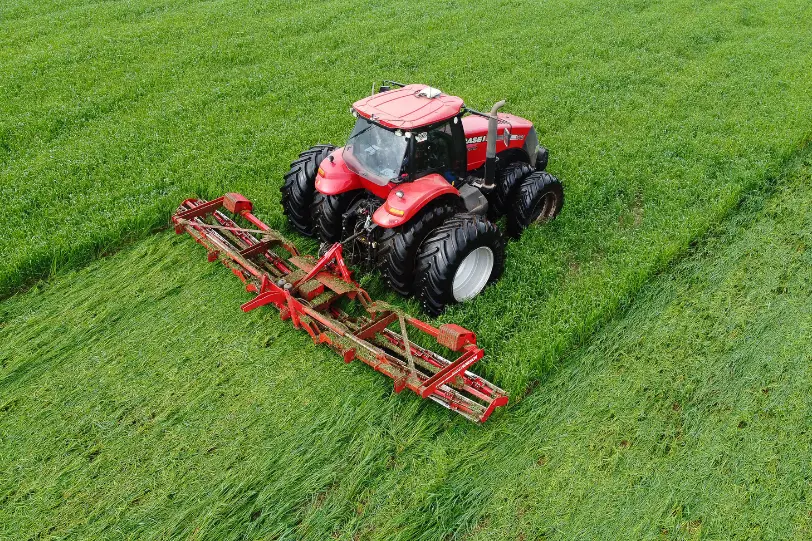
Top Causes of Tractor Accidents
Tractor accidents can occur for a wide range of reasons. Below are some of the most common causes seen in both agricultural and industrial settings
- Rollover Incidents
The tractor’s high center of gravity makes it prone to tipping, particularly on uneven terrain or steep slopes. Without ROPS or seatbelts, rollovers frequently lead to serious injury or death. - Operator Error
Inexperience, inadequate training, or fatigue can cause miscalculations regarding the tractor’s turning radius, load capacity, or stability. Simple mistakes, such as failing to engage the brake, can lead to runaways. - Poor Maintenance
Faulty brakes, worn tires, loose steering, or hydraulic malfunctions compromise control. Skipping scheduled maintenance or ignoring minor issues can make accidents more likely. - Distracted Driving
Using a phone, chatting excessively, or checking other equipment while operating the tractor can divert attention from hazards or traffic. Even a brief lapse can prove disastrous given the tractor’s large blind spots. - Roadway Collisions
Motorists sometimes fail to slow down around tractors traveling at much lower speeds. Conversely, tractor operators might not use reflective markings or proper lighting, making them hard to see, particularly at night. - Improper Attachment Use
Equipment such as loaders, plows, mowers, or trailers can shift the tractor’s center of gravity. Overloading or attaching these implements incorrectly can destabilize the tractor. - Unsafe Work Conditions
Poorly lit areas, slick surfaces, hidden ditches, or cluttered construction/farm sites magnify risks. Harsh weather, like rain or fog, further compromises visibility and traction.
Tractor Accidents: How Frequent Are They?
Tractor accidents remain a significant concern in both agricultural and industrial settings:
- Leading Source of Farm Fatalities: According to various farm safety organizations, tractor rollovers and crush incidents top the list of fatal on-farm accidents.
- Rural Road Dangers: Rural highways often lack shoulders or adequate signage. When tractors occupy a lane, faster vehicles must brake suddenly or pass in hazardous ways.
- Underreported Incidents: Minor mishaps—like small rollovers without major injury—may go unrecorded, suggesting official statistics undervalue the real frequency of tractor accidents.
- Growing Equipment Use: As farms mechanize further and new attachments hit the market, operator training sometimes lags, resulting in higher risk.
Agricultural safety organizations, along with state agencies, work to promote rollover protection, seatbelt use, and training programs, but tractor accidents still occur regularly due to the unique challenges and environments in which these vehicles operate.
Legal and Regulatory Considerations After a Tractor Accident
When a tractor accident occurs, several legal and administrative layers can come into play. Determining liability is often complex, yet certain parties are frequently held accountable.
In many cases, the tractor’s driver is held liable for damages. For example, if the driver was on the wrong side of the road or parked improperly, they would typically be responsible for any resulting damages. This straightforward liability often stems from clear violations of road safety norms.
Beyond the driver, other factors can influence liability:
- Worker’s Compensation
In many states, farm or construction employees injured on the job may file claims for medical expenses and lost wages under workers’ compensation laws, assuming the employer is required to carry that coverage. - OSHA Regulations
Construction or industrial sites must adhere to specific Occupational Safety and Health Administration (OSHA) standards. A violation, like lacking ROPS or failing to train operators, can result in fines and liability. - Negligence Claims
If a tractor crash involves private property or occurs on public roads, injured parties might file personal injury lawsuits alleging negligence. Potential defendants include the tractor operator, employer, or even vehicle manufacturers. - Insurance Policies
Farm operations, construction firms, and large property owners often hold liability coverage for machinery accidents. However, coverage details vary widely, prompting disputes over which policy applies or how the accident is classified. - Comparative Fault
Courts weigh whether the operator or other party (e.g., a passing driver) acted reasonably. If both contributed, states with comparative or contributory negligence rules adjust compensation accordingly. - Road Use Restrictions
Tractors typically must follow special guidelines when traveling on highways, such as using reflective triangles or slow-moving vehicle (SMV) emblems. Failing to comply may influence fault determinations.
In summary, while the tractor driver is frequently held responsible, especially in clear-cut cases of operational error, liability can extend to other parties and factors, making each accident unique in its legal implications.
Your Legal Rights After a Tractor Accident
Injured individuals—ranging from tractor operators and farmworkers to passing motorists—can seek compensation through civil lawsuits. If you’ve sustained injuries in a tractor accident caused by another person’s negligence, you may be entitled to seek compensation for your medical expenses, lost income, and other accident-related damages. Potential claims include:
- Personal Injury
Damages address hospital bills, rehabilitation costs, and any lingering disability. Plaintiffs may also recover lost wages for missed work or reduced future earning capacity. - Wrongful Death
Surviving family members of a tractor accident victim can claim funeral expenses, loss of companionship, and the deceased’s future financial support in cases of fatal rollovers or collisions. - Property Damage
Destruction of vehicles, farm equipment, or other personal property might be included in lawsuits, especially if a tractor crash causes extensive damage. - Product Liability
If a design flaw or manufacturing defect, such as faulty brakes or a poorly designed ROPS, contributed to the accident, the tractor or part manufacturer might be liable. - Pain and Suffering
Courts commonly compensate victims for physical pain, emotional trauma, and the overall decline in quality of life that injuries cause.
Establishing liability hinges on proving that another party—be it an employer, manufacturer, or driver—acted negligently or violated a known duty of care. This means that the path to securing your rightful compensation involves demonstrating how another’s negligence directly led to the accident and your subsequent injuries.
Key Questions About Tractor Accidents
- Do tractor operators need a special license to drive on public roads?
Requirements differ by state. Some areas exempt farm vehicles from licensing but mandate SMV signs or lights. Consulting local laws or an attorney clarifies specific regulations. - What if I’m injured while operating a tractor for work?
Workers’ compensation typically covers on-the-job injuries. However, if a third party’s negligence contributed, like a car driver hitting the tractor, you may pursue additional claims against that party. - Am I always at fault if a motor vehicle rear-ends my slow-moving tractor?
Not necessarily. Motorists must drive attentively and slow down for visible farm equipment. Yet, if the tractor operator failed to display reflective markings at night, liability could shift or be shared. - Are older tractors without ROPS inherently unsafe?
Many older models lack rollover protection. While not automatically “unsafe,” they pose higher rollover risks. Courts may consider the operator’s or employer’s failure to retrofit ROPS as evidence of negligence. - How can The Injury Helpline assist if my accident only led to moderate injuries?
The Injury Helpline is available 24/7 with a free consultation, connecting you nationwide to injury lawyers, no matter how severe or moderate your injuries may be.
Underlying Risks of Tractor Use
Tractors fulfill vital roles, but inherent vulnerabilities persist. Common factors include:
- Overturning Hazards: Rough terrain, ditches, or mismanaged loads can tip a tractor sideways or backward.
- Lack of Training: Operators might underestimate how quickly a tractor can tip under certain loads or angles.
- Speed Differences on Roads: When vehicles traveling at 55 mph encounter a tractor at 15 mph, collisions occur if drivers don’t adjust safely.
- Distractions: Both the tractor operator and surrounding motorists can be inattentive, leading to “look but fail to see” incidents.
- Weather and Visibility: Dust, fog, and nighttime conditions reduce clarity, increasing the chance of hitting or sideswiping slow-moving farm equipment.
- Failing Maintenance: Routine checks of fluid levels, hydraulic systems, and tire integrity are often overlooked, yet they are crucial to avoiding mechanical failures.
Promoting thorough training, consistent maintenance, and compliance with safety regulations remains essential to reduce these risks.
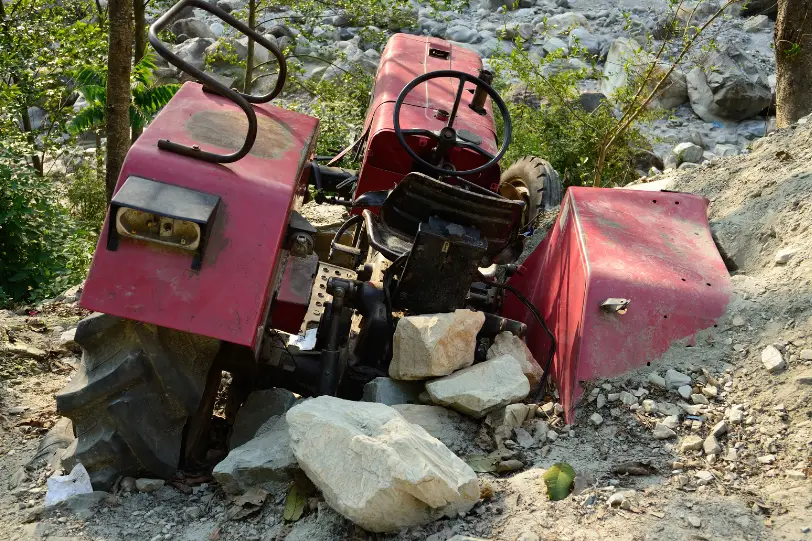
How Poor Tractor Parking Causes Crashes
In addition to operational risks, the way tractors are parked can also pose dangers—especially in rural environments
- Limited Visibility: Tractors parked at the edge of a property can be difficult to spot, especially in poorly lit rural areas. This lack of visibility makes it easy for a driver to crash into these large vehicles, particularly at night.
- Absence of Hazard Lights: When tractors are parked without hazard lights, they become almost invisible to oncoming traffic in low-light conditions. This dramatically increases the risk of collisions.
- Roadway Intrusion: Tractors parked too close to the road create unexpected obstacles. For drivers, this intrusion can mean split-second decisions to swerve or brake abruptly, which can result in severe accidents, particularly at higher speeds.
In summary, the combination of limited visibility, lack of lights, and encroachment onto roads is a key factor making improperly parked tractors a danger to motorists. Being aware of these issues can help drivers navigate rural roads more safely.
How a Tractor Accident Lawyer Can Help
Legal counsel is invaluable in the aftermath of a tractor accident, particularly if injuries are substantial or if multiple parties dispute responsibility.
- Accident Investigation
Lawyers work with agricultural or engineering experts, reconstructing events to prove whether equipment malfunction or operator error triggered the crash. - Evidence Preservation
Promptly collecting data, like photographs of skid marks or overhead drones capturing site layout, helps attorneys determine what happened and how fast each vehicle was moving. - Identifying Liable Parties
Depending on the context, claims might target employers, property owners, truck drivers, or equipment manufacturers. An attorney ensures each responsible party is included. - Navigating Workers’ Compensation
Injured workers often start with workers’ comp but may pursue additional third-party suits if someone other than their employer caused or contributed to the accident. - Negotiating with Insurers
Agricultural businesses and heavy equipment manufacturers usually maintain comprehensive insurance, which can challenge or undervalue claims. Legal representation defends your rights and helps you pursue the maximum compensation available. - Litigation
If settlement offers fail, attorneys can initiate lawsuits, conduct discovery (collect evidence, depose witnesses), and argue your case in court.
Steps to Take If You’re Involved in a Tractor Accident
These guidelines can protect your well-being and any potential legal claims:
- Seek Medical Attention
Even minor collisions can hide internal injuries. Obtain immediate care and keep medical records linking the injuries to the accident. - Contact Authorities
Depending on the setting, call 911 or inform the employer’s safety officer. Police or OSHA may create incident reports clarifying liability and compliance with regulations. - Document the Scene
Use your phone or camera to record vehicle positions, visible damage, tire tracks, road surfaces, and injuries. Gather eyewitness details and note weather or lighting conditions. - File an Internal Report
If on a job site, notify supervisors or safety personnel. Retain any forms you complete and ask for copies. Workers’ compensation typically requires prompt reporting. - Avoid Admitting Fault
Shock or confusion may lead to unintentional confessions or apologies. Stick to factual accounts without speculating about blame. - Consult an Attorney
If injuries or liabilities are complex, a lawyer can clarify options for workers’ compensation, product liability claims, or personal injury suits.
How The Injury Helpline Supports Tractor Accident Victims
The Injury Helpline is a critical resource for tractor accident victims, offering 24/7 assistance and a free consultation, plus immediate referrals to experienced personal injury lawyers nationwide. Here’s how The Injury Helpline helps you:
- Round-the-Clock Guidance
Tractor accidents can occur at any time—nights, weekends, holidays. You can reach out to The Injury Helpline whenever needed, ensuring swift action. - Free, No-Obligation Referral
Worries about legal fees can discourage accident victims from seeking counsel. With The Injury Helpline, you’re matched with an attorney who often works on a contingency, meaning no upfront cost unless you secure compensation. - National Reach
Tractor regulations and farmland practices vary by region. The Injury Helpline’s broad network ensures your lawyer has local knowledge of workers’ comp laws, road guidelines, and relevant farm standards. - Tailored Selection
Every tractor accident scenario is different—some involve equipment defects, and others revolve around collisions with passenger cars. The Injury Helpline connects you to a professional skilled in your specific case type. - Ongoing Support
Beyond initial consultation, The Injury Helpline remains available if you need additional resources or direction throughout your legal journey.
Tractor accidents occur in a wide range of environments—farmlands, construction zones, and rural roads—and frequently lead to severe or fatal outcomes. From rollovers caused by uneven terrain to collisions with passenger vehicles on highways, the risks are significant, and the legal ramifications often extend beyond simple insurance claims. Operators, employers, property owners, and equipment manufacturers may share liability if negligence or regulatory violations contributed to the crash.
If you face the aftermath of a tractor accident, prioritize medical care, document the incident meticulously, and consider your legal avenues. The Injury Helpline stands ready to assist 24/7, offering a free consultation and immediate connection to an injury lawyer nationwide, at no upfront cost. By taking these steps promptly and engaging an experienced attorney, you strengthen your ability to pursue compensation for your injuries and recovery needs.
What Is a Tractor Accident?
A tractor accident generally refers to collisions, rollovers, or other incidents involving agricultural or industrial tractors. These powerful machines are essential in farming, construction, and landscaping industries. However, their size, weight, and specialized functions can make accidents both frequent and severe. Tractor accidents may occur on farms, rural roads, construction sites, or anywhere else these vehicles operate.
Because tractors are designed for specific tasks rather than traditional roadway use, they often lack the safety features and maneuverability of standard vehicles. Their slow speed on roads also creates significant risks when they interact with faster-moving traffic. In addition, rollovers rank among the most dangerous and frequent tractor hazards, especially if tractors lack proper rollover protection structures (ROPS).
Tractors often pose challenges on roads due to their substantial size, which can take up much of the road, leaving little room for others. Their large frames can dominate much of the available space, leaving limited room for other vehicles to maneuver safely. Even with visible warnings such as ‘LARGE VEHICLE’ signs, accidents are still prevalent.
The lack of space often forces other drivers into precarious scenarios, especially when attempting to overtake these oversized vehicles. This can lead to collisions, with drivers sometimes suffering serious injuries and extensive vehicle damage due to the insufficient room available to pass safely. Consequently, the sheer size of tractors can inadvertently create hazardous road conditions.
Top Causes of Tractor Accidents
Tractor accidents can occur for a wide range of reasons. Below are some of the most common causes seen in both agricultural and industrial settings
- Rollover Incidents
The tractor’s high center of gravity makes it prone to tipping, particularly on uneven terrain or steep slopes. Without ROPS or seatbelts, rollovers frequently lead to serious injury or death. - Operator Error
Inexperience, inadequate training, or fatigue can cause miscalculations regarding the tractor’s turning radius, load capacity, or stability. Simple mistakes like failing to engage the brake can lead to runaways. - Poor Maintenance
Faulty brakes, worn tires, loose steering, or hydraulic malfunctions compromise control. Skipping scheduled maintenance or ignoring minor issues can make accidents more likely. - Distracted Driving
Using a phone, chatting excessively, or checking other equipment while operating the tractor can divert attention from hazards or traffic. Even a brief lapse can prove disastrous given the tractor’s large blind spots. - Roadway Collisions
Motorists sometimes fail to slow down around tractors traveling at much lower speeds. Conversely, tractor operators might not use reflective markings or proper lighting, making them hard to see, particularly at night. - Improper Attachment Use
Equipment such as loaders, plows, mowers, or trailers can shift the tractor’s center of gravity. Overloading or attaching these implements incorrectly can destabilize the tractor. - Unsafe Work Conditions
Poorly lit areas, slick surfaces, hidden ditches, or cluttered construction/farm sites magnify risks. Harsh weather, like rain or fog, further compromises visibility and traction.
Tractor Accidents: How Frequent Are They?
Tractor accidents remain a significant concern in both agricultural and industrial settings:
- Leading Source of Farm Fatalities: According to various farm safety organizations, tractor rollovers and crush incidents top the list of fatal on-farm accidents.
- Rural Road Dangers: Rural highways often lack shoulders or adequate signage. When tractors occupy a lane, faster vehicles must brake suddenly or pass in hazardous ways.
- Underreported Incidents: Minor mishaps—like small rollovers without major injury—may go unrecorded, suggesting official statistics undervalue the real frequency of tractor accidents.
- Growing Equipment Use: As farms mechanize further and new attachments hit the market, operator training sometimes lags, resulting in higher risk.
Agricultural safety organizations, along with state agencies, work to promote rollover protection, seatbelt use, and training programs, but tractor accidents still occur regularly due to the unique challenges and environments in which these vehicles operate.
Legal and Regulatory Considerations After a Tractor Accident
When a tractor accident occurs, several legal and administrative layers can come into play. Determining liability is often complex, yet certain parties are frequently held accountable.
In many cases, the tractor’s driver is held liable for damages. For example, if the driver was on the wrong side of the road or parked improperly, they would typically be responsible for any resulting damages. This straightforward liability often stems from clear violations of road safety norms.
Beyond the driver, other factors can influence liability:
- Worker’s Compensation
In many states, farm or construction employees injured on the job may file claims for medical expenses and lost wages under workers’ compensation laws—assuming the employer is required to carry that coverage. - OSHA Regulations
Construction or industrial sites must adhere to specific Occupational Safety and Health Administration (OSHA) standards. A violation, like lacking ROPS or failing to train operators, can result in fines and liability. - Negligence Claims
If a tractor crash involves private property or occurs on public roads, injured parties might file personal injury lawsuits alleging negligence. Potential defendants include the tractor operator, employer, or even vehicle manufacturers. - Insurance Policies
Farm operations, construction firms, and large property owners often hold liability coverage for machinery accidents. However, coverage details vary widely, prompting disputes over which policy applies or how the accident is classified. - Comparative Fault
Courts weigh whether the operator or other party (e.g., a passing driver) acted reasonably. If both contributed, states with comparative or contributory negligence rules adjust compensation accordingly. - Road Use Restrictions
Tractors typically must follow special guidelines when traveling on highways, such as using reflective triangles or slow-moving vehicle (SMV) emblems. Failing to comply may influence fault determinations.
In summary, while the tractor driver is frequently held responsible, especially in clear-cut cases of operational error, liability can extend to other parties and factors, making each accident unique in its legal implications.
Your Legal Rights After a Tractor Accident
Injured individuals—ranging from tractor operators and farmworkers to passing motorists—can seek compensation through civil lawsuits. If you’ve sustained injuries in a tractor accident caused by another person’s negligence, you may be entitled to seek compensation for your medical expenses, lost income, and other accident-related damages. Potential claims include:
- Personal Injury
Damages address hospital bills, rehabilitation costs, and any lingering disability. Plaintiffs may also recover lost wages for missed work or reduced future earning capacity. - Wrongful Death
Surviving family members of a tractor accident victim can claim funeral expenses, loss of companionship, and the deceased’s future financial support in cases of fatal rollovers or collisions. - Property Damage
Destruction of vehicles, farm equipment, or other personal property might be included in lawsuits, especially if a tractor crash causes extensive damage. - Product Liability
If a design flaw or manufacturing defect, such as faulty brakes or a poorly designed ROPS, contributed to the accident, the tractor or part manufacturer might be liable. - Pain and Suffering
Courts commonly compensate victims for physical pain, emotional trauma, and the overall decline in quality of life that injuries cause.
Establishing liability hinges on proving that another party—be it an employer, manufacturer, or driver—acted negligently or violated a known duty of care. This means that the path to securing your rightful compensation involves demonstrating how another’s negligence directly led to the accident and your subsequent injuries.
Key Questions About Tractor Accidents
- Do tractor operators need a special license to drive on public roads?
Requirements differ by state. Some areas exempt farm vehicles from licensing but mandate SMV signs or lights. Consulting local laws or an attorney clarifies specific regulations. - What if I’m injured while operating a tractor for work?
Workers’ compensation typically covers on-the-job injuries. However, if a third party’s negligence contributed, like a car driver hitting the tractor, you may pursue additional claims against that party. - Am I always at fault if a motor vehicle rear-ends my slow-moving tractor?
Not necessarily. Motorists must drive attentively and slow down for visible farm equipment. Yet, if the tractor operator failed to display reflective markings at night, liability could shift or be shared. - Are older tractors without ROPS inherently unsafe?
Many older models lack rollover protection. While not automatically “unsafe,” they pose higher rollover risks. Courts may consider the operator’s or employer’s failure to retrofit ROPS as evidence of negligence. - How can The Injury Helpline assist if my accident only led to moderate injuries?
The Injury Helpline is available 24/7 with a free consultation, connecting you nationwide to injury lawyers, no matter how severe or moderate your injuries may be.
Underlying Risks of Tractor Use
Tractors fulfill vital roles, but inherent vulnerabilities persist. Common factors include:
- Overturning Hazards: Rough terrain, ditches, or mismanaged loads can tip a tractor sideways or backward.
- Lack of Training: Operators might underestimate how quickly a tractor can tip under certain loads or angles.
- Speed Differences on Roads: When vehicles traveling at 55 mph encounter a tractor at 15 mph, collisions occur if drivers don’t adjust safely.
- Distractions: Both the tractor operator and surrounding motorists can be inattentive, leading to “look but fail to see” incidents.
- Weather and Visibility: Dust, fog, and nighttime conditions reduce clarity, increasing the chance of hitting or sideswiping slow-moving farm equipment.
- Failing Maintenance: Routine checks of fluid levels, hydraulic systems, and tire integrity are often overlooked, yet they are crucial to avoiding mechanical failures.
Promoting thorough training, consistent maintenance, and compliance with safety regulations remains essential to reduce these risks.
How Poor Tractor Parking Causes Crashes
In addition to operational risks, the way tractors are parked can also pose dangers—especially in rural environments
- Limited Visibility: Tractors parked at the edge of a property can be difficult to spot, especially in poorly lit rural areas. This lack of visibility makes it easy for a driver to crash into these large vehicles, particularly at night.
- Absence of Hazard Lights: When tractors are parked without hazard lights, they become almost invisible to oncoming traffic in low-light conditions. This dramatically increases the risk of collisions.
- Roadway Intrusion: Tractors parked too close to the road create unexpected obstacles. For drivers, this intrusion can mean split-second decisions to swerve or brake abruptly, which can result in severe accidents, particularly at higher speeds.
In summary, the combination of limited visibility, lack of lights, and encroachment onto roads is a key factor making improperly parked tractors a danger to motorists. Being aware of these issues can help drivers navigate rural roads more safely.
How a Tractor Accident Lawyer Can Help
Legal counsel is invaluable in the aftermath of a tractor accident, particularly if injuries are substantial or if multiple parties dispute responsibility.
- Accident Investigation
Lawyers work with agricultural or engineering experts, reconstructing events to prove whether equipment malfunction or operator error triggered the crash. - Evidence Preservation
Promptly collecting data, like photographs of skid marks or overhead drones capturing site layout, helps attorneys determine what happened and how fast each vehicle was moving. - Identifying Liable Parties
Depending on the context, claims might target employers, property owners, truck drivers, or equipment manufacturers. An attorney ensures each responsible party is included. - Navigating Workers’ Compensation
Injured workers often start with workers’ comp but may pursue additional third-party suits if someone other than their employer caused or contributed to the accident. - Negotiating with Insurers
Agricultural businesses and heavy equipment manufacturers usually maintain comprehensive insurance, which can challenge or undervalue claims. Legal representation defends your rights and helps you pursue the maximum compensation available. - Litigation
If settlement offers fail, attorneys can initiate lawsuits, conduct discovery (collect evidence, depose witnesses), and argue your case in court.
Steps to Take If You’re Involved in a Tractor Accident
These guidelines can protect your well-being and any potential legal claims:
- Seek Medical Attention
Even minor collisions can hide internal injuries. Obtain immediate care and keep medical records linking the injuries to the accident. - Contact Authorities
Depending on the setting, call 911 or inform the employer’s safety officer. Police or OSHA may create incident reports clarifying liability and compliance with regulations. - Document the Scene
Use your phone or camera to record vehicle positions, visible damage, tire tracks, road surfaces, and injuries. Gather eyewitness details and note weather or lighting conditions. - File an Internal Report
If on a job site, notify supervisors or safety personnel. Retain any forms you complete and ask for copies. Workers’ compensation typically requires prompt reporting. - Avoid Admitting Fault
Shock or confusion may lead to unintentional confessions or apologies. Stick to factual accounts without speculating about blame. - Consult an Attorney
If injuries or liabilities are complex, a lawyer can clarify options for workers’ compensation, product liability claims, or personal injury suits.
Be Cautious with Quick Settlement Offers
If you’re approached by an insurance company soon after your accident—especially with a rapid settlement—proceed carefully. It’s common for insurers to present early offers that may not fully account for your injuries, long-term effects, or the true value of your claim. Always review any documents thoroughly and avoid signing anything or accepting a payout before discussing the terms with an attorney who specializes in tractor accidents. Expert legal guidance ensures your rights are protected and helps you avoid agreeing to terms that could limit your compensation later on.
Why You Shouldn’t Sign Insurance Documents Right Away
In the aftermath of a tractor accident, you may be approached by insurance companies eager to settle your claim quickly. While it might seem convenient, signing any forms or accepting an initial offer without legal guidance can jeopardize your rights. Insurance paperwork often contains language that limits your ability to pursue further compensation or may undervalue your injuries and future expenses.
Always consult with an attorney before signing anything presented by insurers. A lawyer can review the documents, protect your interests, and help ensure you’re not forfeiting valuable legal claims in exchange for a rushed payout. This precaution could make a significant difference to your recovery and financial security.
How The Injury Helpline Supports Tractor Accident Victims
The Injury Helpline is a critical resource for tractor accident victims, offering 24/7 assistance and a free consultation, plus immediate referrals to experienced personal injury lawyers nationwide. Here’s how The Injury Helpline helps you:
- Round-the-Clock Guidance
Tractor accidents can occur at any time—nights, weekends, holidays. You can reach out to The Injury Helpline whenever needed, ensuring swift action. - Free, No-Obligation Referral
Worries about legal fees can discourage accident victims from seeking counsel. With The Injury Helpline, you’re matched with an attorney who often works on a contingency, meaning no upfront cost unless you secure compensation. - National Reach
Tractor regulations and farmland practices vary by region. The Injury Helpline’s broad network ensures your lawyer has local knowledge of workers’ comp laws, road guidelines, and relevant farm standards. - Tailored Selection
Every tractor accident scenario is different—some involve equipment defects, and others revolve around collisions with passenger cars. The Injury Helpline connects you to a professional skilled in your specific case type. - Ongoing Support
Beyond initial consultation, The Injury Helpline remains available if you need additional resources or direction throughout your legal journey.
Tractor accidents occur in a wide range of environments—farmlands, construction zones, and rural roads—and frequently lead to severe or fatal outcomes. From rollovers caused by uneven terrain to collisions with passenger vehicles on highways, the risks are significant, and the legal ramifications often extend beyond simple insurance claims. Operators, employers, property owners, and equipment manufacturers may share liability if negligence or regulatory violations contributed to the crash.
If you face the aftermath of a tractor accident, prioritize medical care, document the incident meticulously, and consider your legal avenues. The Injury Helpline stands ready to assist 24/7, offering a free consultation and immediate connection to an injury lawyer nationwide, at no upfront cost. By taking these steps promptly and engaging an experienced attorney, you strengthen your ability to pursue compensation for your injuries and recovery needs.